Two-Phase Matrix Flow Boiling™
A new paradigm for AI system design. The technology inside the OmniTherm™ family of cold plates.
Full performance, no throttling
The heat transfer fluid boils at one set temperature, keeping compute, memory and input/output temperatures more consistent as workloads shift. That means higher sustained GPU throughput, more predictable workload performance and a greater return on AI hardware investment.
Highest-density compute
Cold plates as thin as 11.6 mm put more compute in every rack and square meter. Hybrid copper-aluminum construction weighs as little as 300 g, for more design flexibility and lower mechanical loading.
Waterless by design
A sealed, waterless heat transfer fluid keeps water out of the server, reducing IT risk and downtime exposure. Low flow rates cut cooling power and operating costs, for a better cost per unit of compute.
Drops into proven infrastructure
The next-generation cold plate for ZutaCore® HyperCool® uses the same fluid, connections, racks and coolant distribution units, proven across more than 75 deployments. No major infrastructure changes are required, allowing customers to leverage their existing investments.
Built for the chips coming next
Scales beyond the multi-kilowatt packages on industry roadmaps. The same architecture is designed to move into the chip package and, ultimately, onto the silicon itself. The result is longer infrastructure relevance and less redesign risk.
AI cooling is now an end-to-end system challenge: you have to cool the silicon while keeping entire racks and rows stable.
Chief Product and Technology Officer, ZutaCore
Two-Phase Matrix Flow Boiling,
explained
See how a matrix of independent boiling regions cools multi-kilowatt AI packages, and the hot spots inside them, with the fluid held at one temperature.
Pool boiling, flow boiling, and a third approach
For nearly a decade, ZutaCore has deployed two-phase pool-boiling cold plates in commercial high-performance computing systems, where pool boiling has proven stable, efficient and waterless. But AI silicon is moving to super-hot packages of multiple chiplets, stacked logic and memory, with heat shifting in milliseconds. Air and single-phase cooling are reaching their limits, needing ever more flow, pumping power and copper to keep up. That calls for a higher-performance architecture.
Pool boiling
Our foundation, proven in commercial high-performance computing systems for most of a decade in ZutaCore® HyperCool®. A self-regulating bath boils right at the heat: stable, low-flow and waterless.
Channel flow boiling
Pumped liquid boils as it flows along channels in the cold plates.
Two-Phase Matrix Flow Boiling
Brings together the stability of pool boiling and the scalability of flow boiling, with a local, region-by-region response for packages with several temperature ceilings under one lid.
How it works
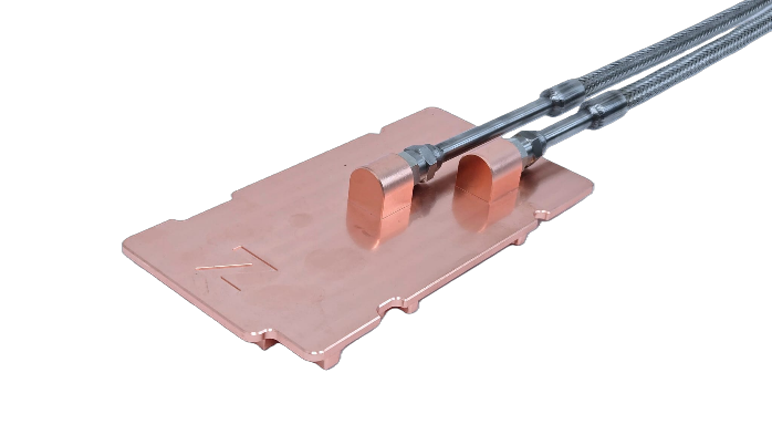
Short flow path
Only a few millimeters of flow, so pressure drop stays low, cutting pumping energy and operating costs.
Continuous fresh liquid supply
Every region is fed from above, at the same temperature.
Self-regulating
Each region regulates its own boiling locally, with no active flow control.
What it unlocks
Built for the silicon that comes next: packages moving past multiple kilowatts, with hot spots that intensify and move with the workload.
The OmniTherm™ family
Every OmniTherm™ cold plate is driven by Two-Phase Matrix Flow Boiling.
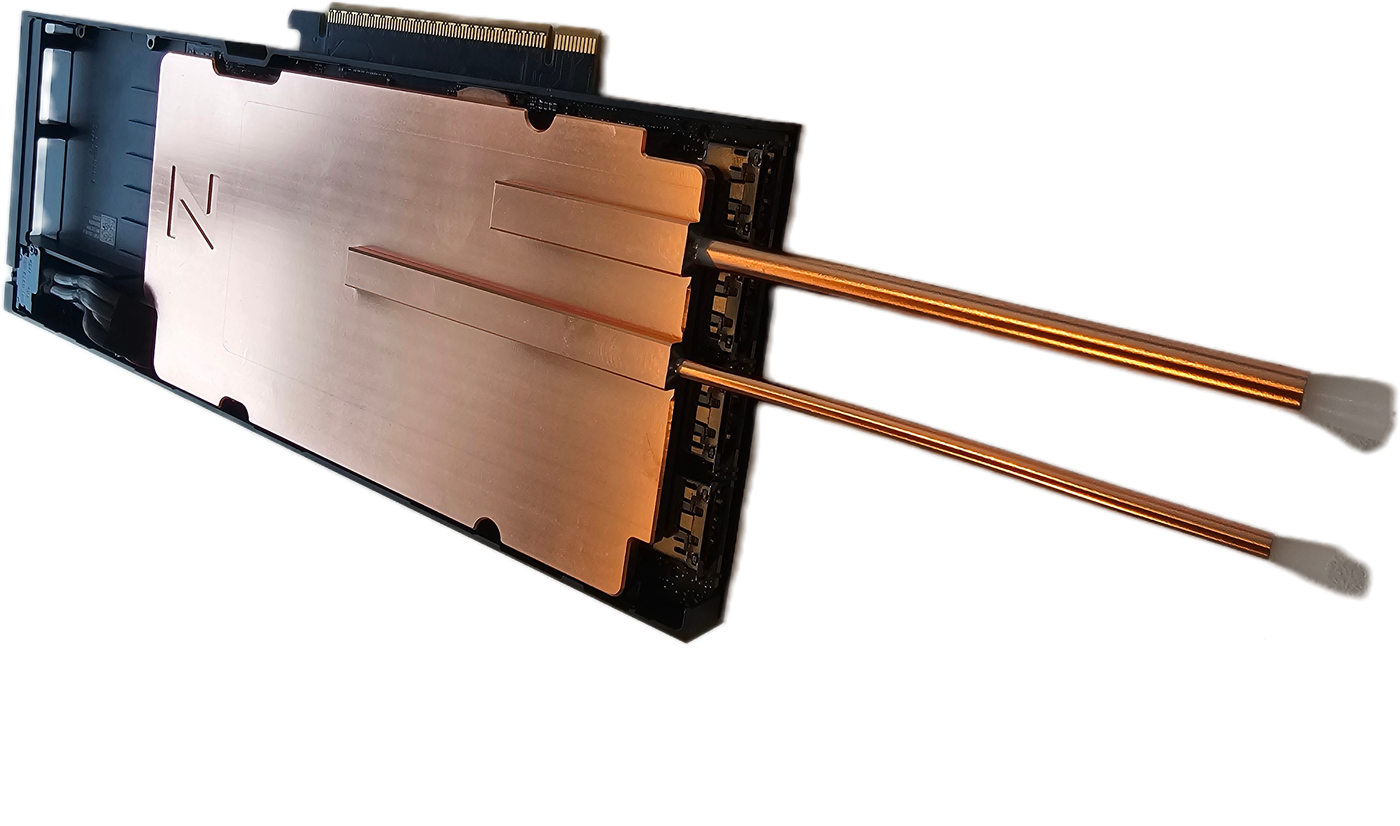
More OmniTherm™ cold plates are in development
Building a platform for the next generation of AI silicon? Tell us what you need to cool.
Where this goes next:
into the package.
The manifold and boiling regions bolt onto the package from outside.
Boiling regions built into the package itself, closer to the heat.
Cooling at the die, designed in step with silicon roadmaps.
A development program is under way with partners. Semiconductor companies, packaging specialists and server makers interested in integrating cooling directly into chip packages are invited to join.
JOIN THE PROGRAM